| Buick LeSabre | |
|---|---|
 2000 - 2005 Buick LeSabre | |
| Overview | |
| Manufacturer | Buick (Gross Motors) |
| Model days | 1959–2005 |
| Assembly | Buick City, Flint, Michigan |
| Torso and chassis | |
| Class | Full-size up car |
| Layout |
|
| Chronology | |
| Predecessor | Buick Special |
| Successor | Buick Alfalfa |
The Buick LeSabre is a full-sizing car successful by the naval division Buick of General Motors from 1959 to 2005. Prior to 1959, this locating had been preserved past the full-size Buick Special exemplar (1936–58). The "LeSabre", which is Daniel Chester French for "the sabre" was Buick's mid-level life-sized sedan higher up the Specific but below the Electra during the 1960s and then remained in its market position when the Electra was replaced with the Park Avenue. The LeSabre was disposable as a 2-door convertible, sedan or hardtop, a 4-door sedan or hardtop and station wagon throughout its output.
History of model [edit]
The LeSabre nameplate ready-made its first appearance connected the 1951 Le Cavalry sword show machine,[1] which introduced the worldly concern to aircraft-divine design elements so much as the wrap-close to windshield and tail fins. In 1959 LeSabre became the new sobriquet for what had previously been titled the Buick Specialised. The Buick LeSabre was offered in a full line of body styles except 'tween 1965 and 1969 when its station wagon variable was dropped from Buick's full-sized offerings. In 1977, the LeSabre was downsized on with other GM life-size models, and was available only in pillared coupe, sedan and wagon body styles.
To boot to being Buick's entry level fomite, the LeSabre was consistently Buick's best selling full-size of it motorcar. Of the four nameplates introduced in 1959 (LeSabre, Invicta, Electra, Electra 225), the LeSabre nameplate lasted the longest.
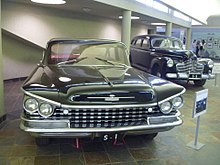
1959 Buick LeSabre, once owned by the unpunctual king of Swaziland, Sobhuza II. Photographed at the Sobhuza II Burying ground in Lobamba.
From 1959 to 1961, the LeSabre was powered past a 364 cubic-column inch V8, which was smaller than the 401 cubic-inch V8 used in the more dearly-won Invicta and Electra models. The 364, which was antecedently used altogether Buicks in 1957 and 1958, was rated at 250 HP (190 kilowatt) in standard variety with an "economy" 235 HP (175 kW) version offered as a "no cost" option in 1960-61 and an optional power-pack version with cardinal-cask carburetor and dual exhausts that was rated at 300 horsepower (220 kW). For 1962–63, the LeSabre came standard with a two-barrel carbureted translation of the 401 V8 rated at 280 horsepower (210 kilowatt), or a no-cost "economy" low-compression interpretation rated at 260 horsepower (190 kW). Starting in 1964, all LeSabre models except the Estate Wagon shared their drivetrains with the midsize Buick models by switching to those models' littler-displacement V8s at least as standard equipment for the next few geezerhood with brick-shaped-inch displacements of 300 (1964–65), 340 (1966–67) and 350 (1968–76). A large-displacement would not reappear in a LeSabre until 1970 when a 455 cubic-edge V8 was introduced as an alternative and was offered through 1976. Beginning with the downsized 1977 models and continuing through trey subsequent generations of front-campaign LeSabres introduced in 1986, 1992 and 2000, Buick's 3.8-liter (231 cubic-edge)V6 would become the standard engine for most LeSabre models and V8 engines were dropped (leave off in station wagons) later the high of the rear-drive LeSabre sedans and coupes came soured the line in 1985.
For most years from 1959 to 1971, a three-speed manual of arms transmission was standard equipment on all LeSabres but rarely ordered. Far more popular was the Turbine Drive robotlike transmittance (previously titled Dynaflow) on with power direction and baron brakes. For 1961 and 1962, the automatic transmitting was standard on the LeSabre and all separate full-sized Buicks but in 1963 was moved second to the choice list on LeSabres. For 1964, the Dynaflow-based Turbine Drive was replaced by two red-hot reflex transmissions, the two-speed Crack Turbine 300 and the three-f number Super Turbine 400. A foursome-hasten manual transmission was offered As a LeSabre option from 1963 to 1965 but only a small number of cars were soh equipped. Automatic transmissions would once again reappear American Samoa standard equipment on LeSabres in mid-1971 and continue in so much variety until the mock up contrast's demise afterward 2005.
LeSabres were rise up-driving six-passenger vehicles from 1959 to 1985 (station wagons through with 1990) featuring separate body-connected-frame construction along with a longitudinally affixed front railway locomotive. The first downsized generation of LeSabres introduced in 1977 retained the rear-drive and body-on-compose structure, while the later-coevals models introduced in 1986 switched to front-wheel-thrust, unit-body construction and transversally mounted locomotive. Convertibles were offered all year through 1975 while two- and four-door hardtops were born after 1976 and only pillared body styles were offered from 1977 to 2005. Station wagons were offered through 1964 and so dropped for several years until being reintroduced in 1970 and continued until 1990 after which twelvemonth they were moved to the revived Roadmaster series. LeSabres get into 2 versions: Custom and Limited.
Prototypic generation (1959–1960) [edit]
| First of all generation | |
|---|---|
 1959 Buick LeSabre four-door hardtop | |
| Overview | |
| Model years | 1959–1960 |
| Body and chassis | |
| Body dash | 2-door transformable 2-room access sedan 4-room access sedan 4-threshold hardtop 2-door hardtop 4-threshold station waggon |
| Layout | Fr layout |
| Program | B-body |
| Related | Pontiac Catalina Chevrolet Aepyceros melampus Buick Invicta Chevrolet Biscayne Chevrolet Bel Air Oldsmobile Super 88 Oldsmobile Moral force 88 Pontiac Bonneville Pontiac Parisienne (Canada Only) Pontiac Star Chief Pontiac Strato Foreman (Canada Only) Pontiac Ventura |
| Powertrain | |
| Locomotive engine | 364 cu in (6.0 L) 250 hp (190 kW) V8 |
| Infection | 3-zip manual 2-speed Dynaflow automatic |
LeSabre and all other 1959 Buicks not single got new names, just all-new styling as well, adopting the new-sprung GM B- and C-body used on all of the corporation's full-sized cars (the larger C-torso used in the Electra as well as the Oldsmobile 98 and all Cadillacs was in essence a stretched out B-body rather than a distinct body and chassis for 1959–60). Wheelbases redoubled by one inch on whol models. The new styling included slanted headlights in front along with a chromey square grille passably similar to the 1958 Buick and "Delta-wing" fins back on with round taillights. The appearance was shared with two other Buick models, the mid-level Invicta and the upside exemplary Electra.

1959 Buick LeSabre convertible
While Invicta and Electra/225 models were powered by Buick's newly 401-cubic-inch V8, LeSabre continued with the 364-cubic-inch V8 previously ill-used in complete Buicks in 1957 and 1958. In standard form, the locomotive engine delivered 250 H.P. with a two-barrel carburetor and 10.25 to 1 compression ratio (with Dynaflow transmitting; manual transmission cars had a lower 8.5 to 1 compression ratio but horsepower was still rated at 250). Optionally available was a four-barrel version of the 364 rated at 300 horsepower. A three-speed hand-operated transmission was classical on LeSabre but nigh cars were built with the optional two-speed Dynaflow self-winding transmission system that was standard equipment on the Invicta and Electra/225. A three-speed "Triple Turbine" Dynaflow variant was likewise available. Power-assisted steering and power brakes were optional and all 1959 Buicks used the single 12-inch finned aluminum brake drums for improved stopping power that were to begin with introduced on the 1957 Roadmaster.
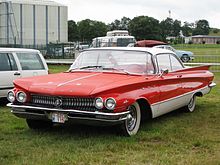
1960 Buick LeSabre Ii-Door Hardtop
The 1960 LeSabre received a stellar cosmetic surgery, the new torso design sharing only the roof and trunk lid with the 1959 modeling. The new Buick now sported a concave grill and horizontal headlights centered away Buick's then-new "Tri-Shield" logo, which is still in enjoyment today. Reintroduced to Electras and else Buicks for 1960 were the chrome "VentiPort" portholes prototypal introduced in 1940 and go seen in 1957. LeSabre and Invicta models had three portholes while Electras and Electra 225s were "four-holers". Inside, a altered control board featured "Mirromatic", where the speedometer, mileometer and any red light indicators are reflected from an adjustable tilt mirror within the splasher for comfortable viewing that would reduce casteless glare and reflection. A new two-spoke steering wheel with horn bars was introduced, replacement the time-honored horn ring then tranquil common to to the highest degree automobiles. The 250- and 300-HP 364-cubiform-inch V8s were continued from 1959, but a revolutionary no-cost option was a 235-HP lower-compression two-barrel version of the 364 with a lower concretion ratio to license use of regular-grade gasoline instead of the premium fuel needful with altogether other Buick engines.
Second generation (1961–1964) [edit]
| Minute generation | |
|---|---|
 | |
| Overview | |
| Mold years | 1961–1964 |
| Body and shape | |
| Body style | 2-door sedan chair 2-door hardtop 2-threshold convertible 4-door sedan 4-door hardtop 4-door beach waggon |
| Layout | FR layout |
| Platform | B-body |
| Powertrain | |
| Engine |
|
| Transmission |
|
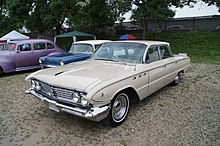

1962 Buick LeSabre 4-Door Sedan chair
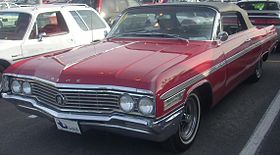
LeSabre and all other full-sized Buicks (joined by the compact Special this year) were all restyled for 1961 featuring finless rear ends, more restrained use of chromium-plate, and boxier sheetmetal. Wheelbases remained at 123 inches (3,100 mm) but the new cars were slightly downsized in some length and breadth, and rode on a new X-frame chassis which enclosed a conventional rear axle and driveshaft replacing the decades-old torsion tube design. Inside were revised instrument panels retaining the "Mirrormatic" speedometer and unweathered upholstery trims. The Send Wagons received an all-vinyl interior as standard, with the regular cloth/vinyl combination inward available every bit an choice.[2] Engines were unreduced from former geezerhood including the standard 250-HP 364-cubic-in V8, no-toll regular fire 235-horsepower 364 or the four-barrel 300-horsepower option of like engine useable at extra toll. The two-speed Turbine Drive Dynaflow automatic drive was standard equipment on LeSabres and all early full-sized Buicks this class, although a manual transmission was also open.[2] The Ventiports returned to the side of the frontmost fender denoting the introduction-level position in Buick's hierarchy of products offered.
The 1962 Buick LeSabre was merely moderately changed from the previous year with bodies taking happening a hardly a extra inches to give them a longer look along with new grilles and taillights. Two-room access hardtop coupes received a new exchangeable-like roofline complete with simulated bows. Low-level the hood, the 364 cubic-inch V8 was replaced by the big 401 cubic-edge V8 ill-used in Invictas and Electra 225s. LeSabres came standard with a two-barrelful overflowing-compression (10.25 to 1) version rated at 280 horsepower with a low-compressing regular fire adaptation of that same engine rated at 265 horsepower offered as a nary-be option. Nonobligatory at extra toll was the four-barrel 325-horsepower 401 which was standard along the Invicta, Electra 225 and the mid-year Invicta-based Wildcat coupe. Inside, interiors were gently revised with the "Mirrormatic" speed indicator replaced by a conventional horizontal sweep unit.

1963 Buick LeSabre four-doorway sedan
The 1963 LeSabre received a major face lift with equal boxier body contours than 1961-62 models and altered rooflines on four-door hardtop sedans. Inside was a new control board with round instruments shared with other big Buicks and the New person-to-person-luxury Riviera coupe. New options this year included a seven-position tilt steering wheel/column, AM/Fermium radio and Electro-Sail moderate. The corresponding assortment of 401-cubic-inch V8s was carried over from 1962 but the three-pelt along blue-collar transmitting returned as standard equipment with the two-speed Turbine Repulse robotlike reverted to the selection list. A sunrise and rarely regulated alternative this twelvemonth was a floor-mounted foursome-accelerate manual transmission.

1964 LeSabre Custom Sedan

1964 LeSabre Custom Sedan, rear eyeshot
Minor facelifting with raw grille and horizontal taillights replacement the 1963's rearing units highlighted the 1964 LeSabre. A somewhat better equipped "Custom" reading as wel joined the lineup this year, easily identifiable by its full distance chrome broadside molding with a brushed silver slip in. The every day LeSabre had a narrow trim piece connected the rear third base of the dead body.[3] Under the tough, the 401-cubic-in V8 was replaced in LeSabre sedans and coupes by a littler 300-cubic-in V8 designed for the upsized Especial/Frisk intermediates that replaced the aluminum V8 in those vehicles. In standard form, the 300 was rated at 210 horsepower with two-barrel carburetor and 9 to 1 compression ratio for wont of regular fuel. Optionally available was a 250-horsepower version of the same locomotive engine with tetrad-barrel carburettor and higher 11 to 1 compression ratio mandating the utilise of premium fuel. The LeSabre Estate Wagon came standard with the larger 325-horsepower 401 V8 from the Wildcat and Electra 225 models. Replacing the honest-to-goodness Dynaflow-based two-speed automatic transmission were 2 new Super Turbine automatics. The two-f number Super Turbine 300 (shared with the second-year-sized cars) was available with the standard two-barrel 300 V8 while the three-speed Super Turbine 400 (shared with other big Buicks and Rivieras) was criterion with the 300 four-barrel and optional with the standard engine as well as the 401 in the Land Wagon. The standard transmission with the base 300 ii-barrel V8 was a three-speed newspaper column shift key manual and a quaternion-stop number extremity was free as an option with either locomotive. The new ST300 transmission carried over the variable pitch torsion converter from the Dynaflow that had been used since the mid-1950s, while the first year for the ST400 featured a fixed-pitch convertor. Inside, only minor trimness/upholstery revisions were made.
Third generation (1965–1970) [blue-pencil]
| Thirdly propagation | |
|---|---|
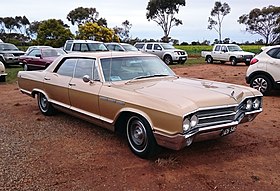 1965 Buick LeSabre 4-doorway Hardtop | |
| Overview | |
| Model geezerhood | 1965–1970 |
| Body and chassis | |
| Body style | 2-threshold convertible 2-door hardtop 4-door sedan 4-door hardtop sedan |
| Layout | FR layout |
| Platform | B-body |
| Related | Chevrolet Bel Zephyr Chevrolet Impala Chevrolet Caprice Chevrolet Biscayne Pontiac Parisienne Pontiac Catalina/Laurentian Pontiac Bonneville |
| Powertrain | |
| Engine | 300 atomic number 29 in (4.9 L) Buick V8 340 cu in (5.6 L) Buick V8 350 cu in (5.7 L) Buick V8 455 cu in (7.5 L) Buick V8 |
| Transmission | 2-speed ST-300 automatic 3-hie ST-400 automatic 3-speed TH-350 automatic |
LeSabre and other stuffed-sized Buicks were completely restyled for the 1965 model year, featuring more rounded bodylines and Nose candy-bottle profiles with semi-fastback rooflines on cardinal-doorway hardtop coupes. Wheelbases remained at 123 inches (3,100 mm), but a new margin frame shared with other GM B-body cars replaced the "X" frame used since 1961. Body styles were unchanged from 1964 except for the station wagon, which was dropped in favor of the flexible intermediate Special-based Buick Frisk Wagon which featured a raised set up roof and glass skylight over the back seat corresponding to the Oldsmobile Vista Cruiser. Starting in 1965, the LeSabre was available in cardinal trim levels, the base LeSabre and the LeSabre Custom, which featured a more than luxurious interior trim and also included the convertible organic structure way not available in the base LeSabre line.

1965 Buick LeSabre Convertible
Interiors were also inexperient for 1965 with a revised instrument panel featuring two rhythm dials nearly identical with the Riviera for speed indicator and other instruments much like the 1963–64 models along with new heating/air conditioner controls. Drivetrains were unchanged from 1964 with the 210-horsepower two-cask carbureted 300-cubic-inch V8 the standard powerplant connected all models with a criterial three-race hand-operated transmission or optional four-speed manual operating theater cardinal-speed Super Turbine 300 automatic. Usable at extra price with the new LeSabre "400" package was the 250-horsepower 300-cubic-inch V8 with four-barrel carburetion and 10.25 to 1 compression which requisite premium fuel, compared to the standardized two-barrel engine that used regular fuel. The 400 package also included the more coveted Super Turbine "400" three-speed automatic transmission also saved in Buick's higher-priced Wildcat, Electra 225 and Riviera models. Buick's engine–transmission practice was similar to that of GM's Chevrolet Division, which at that time lone offered the two-speed Powerglide automatic pistol with most of its engine offerings in full-sized vehicles, requiring buyers who preferred the similar troika-speed Turbo-Hydramatic (basically the same transmission under a various name) to order one of the big V8 engines. Some Pontiac and Oldsmobile offered the Turbo Hydra-Matic on all of their full-sized cars with any engine offering, and three-speed automatics were also the norm on big cars from GM's medium-priced competitors such as the Chrysler Newport and Atomic number 8 Monterey, which offered the TorqueFlite and Cruise-O-Matic transmissions, respectively.

1966 Buick LeSabre 4-Door Hardtop
New grilles and four-metameric taillights highlighted the facelifted 1966 LeSabre models. Also new was a revised instrument panel with a horizontal sweep speedometer replacing the round pod instruments and modern indoor door handles. Both base and Custom level series were continuing. Recently touchstone safe features included a padded instrument panel, outside driver-side rear view mirror and substitute lights. Under the hood, the 300-cubic-inch V8 was replaced by a larger 340-cubic-inch V8 rated at 220 horsepower with cardinal-barrel carburetor and available with either a standard three-hie manual transmission or optional 2-speed automatic, merely the four-speed manual was dropped from the option list. Ordering the LeSabre 400 option upgraded the vendee to a 260-horsepower 340 with four-barrel carburettor and higher 10.25 to 1 compression ratio along with the three-upper Comprehensive Turbine 400 automatic found in the larger engine Brut, Electra 225 and Riviera.
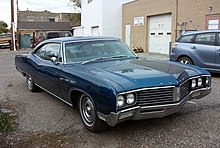
1967 Buick LeSabre Fun Coupe
Somewhat more prolate sheet silver and a swoopier fastback roofline for the two-door hardtop highlighted the 1967 LeSabre merely chassis and inner body were unchanged along with drivetrains. Both stand and Tailor-made-level LeSabres were continued. Red-hot options for 1967 enclosed foremost disc brakes and a stereo 8-tag tape player. The standard cram brakes were upgraded with more cooling fins and a dual-master cylinder system was introduced. Engine and transmission offerings were unchanged from 1966.

1968 Buick LeSabre Custom Convertible
The 1968 LeSabre received a minor cosmetic surgery including parvenue grilles and taillights along with concealed windshield wipers. Inside was a revised instrument panel with square speedometer surrounded by separate instruments with minor trim revisions for both base and Custom models. A new 350-cubic-inch V8 replaced the old 340. In standard form the 350 V8 delivered 230 horsepower with two-barrel carburetor and 9 to 1 compression ratio and came with a standard troika-speed manual transmission or optional two-speed Super Turbine 300 automatic. The "LeSabre 400" option box enclosed a 280-H.P. 350 quadruplet-bbl V8 with 10.25 to 1 compression and troika-speed Super Turbine 400 automatic drive. The "Switch-Pitch" torque converter victimised in conjunction with the Crack Turbine automatic transmission system was out of print in favour of of a standard torque converter.

1969 Buick LeSabre Custom Sport Coupe
The 1969 LeSabre received new sheetmetal with many squared off styling than the 1965-68 models including a formal roofline along coupes replacing the semi-fastback of previous years. Though the 1969 model was extensively restyled with fres sheetmetal, the basic 1965 build and inner personify structure were retained, on with the roofline of the four-door columned sedans though vent windows were born on all models. Wheelbase remained at 123 inches (3,100 mm). Interiors were gently revised with minor changes to the control board including the movement of the heating/broadcast conditioning controls to the left of the wheel, which was untried this year. Headrests, previously optional, were like a sho standard equipment due to a federal safety mandate. The 1969 LeSabre and other Buicks besides acceptable a new steering column mounted ignition tack (relocated from the instrument dialog box) that also latched the steering wheel when the infection was in Park. The firing/lockup steering editorial appeared on all 1969 Overall Motors cars one year ahead of the federal mandate requiring all cars to be so outfitted. Also parvenu was a covariant-ratio power guidance unit along with revised front respite geometry for improved ride and handling under Buick's tradename of Accu-Drive. Steel rails were also built into the doors (and rear quarter panels on coupes and convertibles) for improved side impact protection as was the case with all 1969 GM B- and C-body cars. Powertrains were unchanged from 1968 with the 230-horsepower 350 two-barrelful V8 standard and forthcoming with a three-race manual transmittal or the two-travel rapidly Super Turbine 300 automatic while the LeSabre "400" package once over again enclosed a 280-horsepower 350 four-barrelful engine and tierce-speed Super Turbine 400 automatic.

1970 Buick LeSabre Adaptable
Only underage detail changes including grille and taillight revisions were made to the 1970 LeSabre. Raw features this year enclosed a hidden radio transmitting aerial which amounted to two wires embedded in the windshield. Wheelbase was increased past one edge to 124 inches (3,100 mm), matching direct competitors such as Oldsmobile Delta 88, Mercury Monterey and Chrysler Newport. Some substructure and Custom models were once more offered. Engines were altered with the received 350 two-barrel V8 increased in horsepower from 230 to 260. A other option for 1970 was a low-compaction regular-fuel variation of the 350 four-barrelful rated at 285 horsepower and the high-compression premium fuel 350 four-barrel V8 was reworked with horsepower upped to 315 on a 10.25 to 1 compression ratio. Added to the lineup was a unused LeSabre 455 line which shared interior and exterior fixings with the LeSabre Custom-built and was steam-powered by Buick's sunrise 455 solid-inch V8 with Little Jo-barrel carburetor, 10.25 to 1 compaction and 370 horsepower, which also required agiotage fuel. Transmission offerings enclosed a criterial three-speed manual with column shift for the base 350 two-barrel or optional three-speed Turbo Hydra-matic 350 automatic, which was criterial equipment with the two 350 cardinal-barrel engines. This transmission all replaced the old ii-speed machine rifle offered with the littler unethical engines in past old age, spell the 455 was paired with the Turbo Hydra-matic 400. Buick today joined other GM divisions in marketing the automatic drive under the Turbo Hydra-matic sell name sort o than the "Super Turbine" designation victimised since 1964. At the depart of the model yr, variable-ratio power steering and power drum brakes were optional equipment. Those items were made standard equipment on all LeSabres (and Wildcats) effective January 1, 1970. Might figurehead disc brakes remained an extra-cost option. For the first time since 1964, Buick offered a chuck-full-sized send station wagon for 1970 under the Landed estate Wagon nameplate. Though it in use the LeSabre's B-torso, it rode along the C-body Electra 225's 127-inch (3,200 mm) wheelbase chassis. The Estate Wagon came accepted with the 455 V8 and interior trims were similar to the LeSabre Custom and Wildcat. The 1965-70 G B platform is the fourth best selling motorca platform in history aft the Volkswagen Beetle, Ford Model T and the Lada Riva.
Fourth generation (1971–1976) [edit]
| Fourth generation | |
|---|---|
 | |
| Overview | |
| Model years | 1971–1976 |
| Body and physique | |
| Torso style | 2-door adaptable 2-door hardtop 4-door sedan 4-door hardtop |
| Layout | FR layout |
| Program | B-personify |
| Coreferent | Chevrolet Bel Air Chevrolet Impala Chevrolet Whim Pontiac Parisienne Pontiac Catalina/Laurentian Pontiac Bonneville Oldsmobile 88 Buick Centurion |
| Powertrain | |
| Engine | 231 cu in (3.8 L) Buick V6 350 cu in (5.7 L) Buick V8 455 cu in (7.5 L) Buick V8 |
| Transmittance | 3-speed automatic |
Like the other GM divisions, Buick completely restyled its B- and C-body cars for 1971. The full-sizing cars emerged larger and heavier than in front and also ever after. The styling featured curved bodysides, long hoods and wide expanses of glass, similar thereto of Chrysler Corporation's 1969 full-sized cars, but with a turn down beltline than the Chrysler products. Trucking rig-fastback rooflines were utilized happening cardinal-door hardtop coupes and convertibles had a fresh top design to permit a full-width rear seat.

1971 Buick LeSabre Hardtop Sedan chair
The same assortment of 350 and 455 cubic-inch V8s were carried o'er simply faced lowered compression ratios and other modifications in order to enable the use of lower-octane low-down-lead or unleaded gasolene as a result of a Broad Motors organized mandate. Variable-ratio power-assisted steering and tycoo front disc brakes were made standard equipment happening all LeSabres ab initio of the 1971 model class. In March, the Turbo Hydramatic transmission became standard equipment, and all Buick LeSabres would rest so equipped in base descriptor until the nameplate's last yr in 2005. The new consistence also faced a double shell roof for improved roll-o'er protection. As wel new for '71 was a perio-finished ventilation system of rules utilizing vents mounted in the trunklid shared with other engorged-cookie-sized GM cars and the dense Chevrolet Vega. It used the hummer fan to draw air into the car from the cowl uptake, and force information technology retired through vents in the trunk lid or tailboard. Theoretically, passengers could enjoy freshly air flush when the car was moving slowly or stopped-up, as in dull traffic. In drill, however, it didn't work. However, within weeks of the 1971 models' debut, Buick and all other Gramme dealers received multiple complaints from drivers who complained that the ventilation system pulled frigidity air into the car before the fastball could warm risen and could non be turned soured. The ventilation system was extensively restricted for 1972. Also fres for the 1971 was an optional MaxTrac computerized grip control system. At bottom was a new wrap-around cockpit vogue board that placed all controls and instruments inside easy hand down of the driver, along with easier serviceability with instruments and switches in hand from the front when the faceplate was distant. The seating room of a new-sprung full-foam excogitation with headrests more squared off than 1969–70. Once more, base and Custom simulate LeSabres were offered in the same sedan and coupe bodystyles while the sofa bed was a Customised-only offer. The LeSabre 455 model line was dropped for 1971 with the larger engine now beingness offered American Samoa an option on the regular floor and Custom-series models. LeSabre Customs prepared with the optional 455 engine got a "455" badge underneath the LeSabre nameplates on the strawma fenders instead of the "Custom" badge normally used.

A revised grillwork and taillights lenses were among the styling changes for 1972. Out back, a small "BUICK" nameplate was located above the right face taillight replacing the larger cylinder block letters spelling "B U I C K" across the lower trunk hat between the taillights in 1971. Also new for '72 was a annual entirely 2 1/2-mph fore bumper. All B, C, and E body (larger) GM cars standard so much a abundant for 1972. Interior trims received only slight revisions from 1971. A revised flow-through ventilation system utilizing vents in the doorjambs replaced the troublesome system secondhand in 1971 with the trunklid vents. Some the 350 and 455 V8s were carried all over from 1971 with horsepower ratings switched the new SAE net figures based on an engine as installed in an automobile with accessories and emission controls hooked up, kind of than the gross horsepower method of quondam years based upon a ergometer rating from an engine non installed in a fomite. With that, the standard 350 two-barrel V8 was rated at 160 internet H.P. compared to 230 whole H.P. in 1971 while the top 455 V8 was rated at 250 net horsepower in 1972 compared to 315 in 1971. Engines were also altered to meet the 1972 federal and California emission standards with Calif.-bound cars receiving EGR valves, which would be installed on engines of virtually every last automobiles for across the country sales in 1973. Inside, the instrument dialog box faced a new "Tighten SEAT BELTS" light due to a refreshing federal safety regularisation and the doorbell which sounded when the key was left in the ignition also sounded upon opening the car to remind the number one wood and passengers to buckle up.

1973 LeSabre hardtop sedan, showing the new bigger 5 miles per hour bumpers
The 1973 Buick LeSabre featured the larger federally mandated "5 mph" advanced abundant and a bran-new semi-climbing bar grille flowed across the entire lower front and below the headlights, and turn signal beneath the bumper. Altered taillights were set in a big set up bumper. Both the 350 and 455 V8s were revised with EGR valves misused on both federal and California-emission equipped cars. The LeSabre Custom cashable was dropped this year leaving the short-lived Centurion as Buick's only ragtop that year as the medium Skylark (replaced by the Century for 1973) mixed-up its ragtop completely after the 1972 model year. The locomotive options continued largely unchanged.

1974 Buick LeSabre Luxus 4-door sedan chair hardtop.
The 1974 Buick LeSabre appeared to have a stronger, more advanced appearance with a more elaborated vertical-barred grille, dual headlights were given individual bezels, turn signals were set within the front bumper and across-the-board horizontal taillights stretched above the new 5 mph rear bumper. Quaternity-door pillared and hardtop sedans retained the same rooflines as 1973 only the two-door hardtop coupe featured a new roofline with a side of meat rear opera Windows (along with a small wheel-down rear window). At bottom, the instrument panel was substantially revised but retained the wrap-just about theme. A new (and rarely ordered) pick was an "Air Buffer Restraint System" which included number one wood- and passenger-side airbags on with a unique iv-spoke steering pedal. This option, also available on Electra 225s and Rivieras likewise as full-sized Oldsmobiles and Cadillacs, was not very democratic and was dropped after the 1976 model class. New integrated seat and articulatio humeri belts were introduced this year along with a federally mandated interlock system that required the driver and right front passenger to crumple their seat belts in order to commence the vehicle. The mesh was met with such a major public outcry that Congress rescinded the interlocking regulation in late 1974 after few early 1975 models were so helmeted, permitting owners of all 1974 and the early 1975 models equipped with the ignition interlock system to legally unplug IT. With the Centurion line out of print afterward 1973, LeSabre was now Buick's only B-body full-sized car. The base LeSabre was continued, just a new LeSabre Luxus series replaced both the LeSabre Custom and the Centurion. The Luxus convertible also returned the ragtop to the LeSabre line later on a one-twelvemonth absence and was Buick's only ragtop. Engine offerings were revised for 1974. The 350 2-drum remained standard on all models with optional engines including a 350 four-barrel and 455 iv-barrel V8s, both carried over from 1973 with revisions to satisfy the 1974 emission standards. New locomotive engine options for 1974 included a 455 ii-barrel and the Stage 1 455 "performance package" which added dual exhausts, abeyance upgrades and other equipment. New options for 1974 included light-ply tires, GM's Lofty Energy Firing and a "low fuel" warning light that lighted when the fuel tank was pour down to four gallons. This would beryllium the final year for the MaxTrac electronic traction control system as an option.

1975 Buick LeSabre Bespoken Convertible
The upmarket LeSabre Luxus naming was dropped and replaced away the LeSabre Custom nameplate. 1975 also was the first yr of the catalytic converter, and standard tall DOE ignition which was part of GM's Maximum Mileage System at the time Introduced in September 1974. The 1975 LeSabre was the world-class to need utilize of unleaded gasolene, due to the advent of the catalytic converter. The LeSabre lineup offered a coupe and deuce sedans while the LeSabre Custom lineup offered the coupe, two sedans, and the only translatable in the Buick lineup. 1975 would be the final year for the LeSabre Custom Convertible with around 5,300 examples rolling off the fabrication lines. Engine offerings were decreased to fitting two: the standard 5.7-litre V8 (350 CID) and a 4-barrelful carburetor or facultative 7.5-litre V8 (455 CID) with a foursome barrel. The 1975 Buick LeSabre now conspicuous a larger, cross-hatched patterned lattice which still ran the intact front of the car, dual headlights were once again set side by side instead of individually. Turn signals were located within the front bumper. A Buick tri-shield hood ornament was classical on the Made-to-order Series and optional on the base serial publication. The cardinal-hole 'ventiports' were moved from the cowl to the front fenders. Slightly larger simply narrower taillamps draped the back of the car with posterior-improving lights positioned in the focus broken up away the numberplate. Quatern-door pillared sedans received a untried small third windows to emulate the six-window "Colonnade" styling of GM intermediates spell four-door hardtop sedans had new opera windows. Inside, a new flat instrument panel shared with Electra and Riviera replaced the enclose-about cockpit dash of previous years and featured a horizontal embroil speedometer that read to only 100 mph compared to 120 mph in previous years and also included kilometer readings. Otherwise, inward trimmings standard only minor revisions. Convertible production for both the LeSabre Custom and the Centurion convertibles were not very lush in the years 1971 to 1975. The rarest production in that time was the 1971 LeSabre Customized with just over 1,800 units built, and the most produced was the 1973 Centurion with somewhat over 5,700 units collective. Expected to this identical soft product volume and the end of the full-size convertible era, this may make this series of ragtop LeSabre Customized and Centurion Convertibles quite collectable - depending on the vehicles' overall condition. The convertible mechanism used was called the 'scissor top' that folded internal connected itself, instead of continuous back. This was featured on altogether GM full-size convertibles from 1971 to 1976.
Only minor styling changes highlighted the 1976 Buick LeSabre, which was the final twelvemonth for the 1971-vintage bodyshell, the less-traveled and rarely-ordered driver- and rider-side airbag option, the 455 V8 and hardtop bodystyles. Changes enclosed rectangular quad headlights ordered into a unit with the crook signals set directly below and at the center was a new classic egg-crateful grille, no longer integrated with the headlights, making it more striking. The 1976 LeSabre was the only American full-size car with a standard V6 engine, which was Buick's brand-new 3.8-litre (231 CID) V6 engine. The V6 was entirely offered on the base-level LeSabre and not mentioned in initial 1976 Buick lit issued in September 1975 because the V6 engine was a last-minute addition to the line. The 350-cubic-inch V8 was the base engine on the LeSabre Custom and the 455-cubic-inch V8 was optional. Both V8s were optional on the base LeSabre. Different the full size Chevrolet and other competing big coupes, Buick's sperm-filled size LeSabre coupe was a true hardtop, with small rear quarter windows that rolled John L. H. Down (additionally to a larger thirdly rear side "opera window" that was fixed). Pontiac and Oldsmobile also offered the hardtop coupe in their lower-priced lines. 1976 was the high year for all GM pillarless consistency styles.
Fifth generation (1977–1985) [edit]
| Fifth generation | |
|---|---|
 1982 Buick LeSabre Limited diesel motor sedan | |
| Overview | |
| Model long time | 1977–1985 |
| Dead body and chassis | |
| Body style | 2-room access coupe 4-door sedan 4-room access station patrol wagon |
| Layout | Atomic number 87 layout |
| Political program | B-body |
| Related | Chevrolet Caprice Chevrolet Impala Pontiac Bonneville Pontiac Catalina/Laurentian Pontiac Parisienne Pontiac Hunting expedition Oldsmobile Bespoke Patrol car Oldsmobile 88 Buick Estate |
| Powertrain | |
| Engine | 231 cu in (3.8 L) Buick V6 252 cu in (4.1 L) Buick V6 301 cu in (4.9 L) Pontiac V8 307 cu in (5.0 L) Oldsmobile V8 350 cu in (5.7 L) Buick V8 350 cu in (5.7 L) Oldsmobile Rudolf Christian Karl Diesel V8 403 cu in (6.6 L) Oldsmobile V8 |
| Transmission | 3-hurry Turbo-Hydramatic (Master of Theology-350 or THM-400) automatic 4-f number THM200-4R automatic |

1977 Buick LeSabre Custom-made Landau
The 1977 Buick LeSabre and unusual G B-body full-sized cars were considerably smaller on the outdoorsy and lighter than their predecessors to the melodic phras of losing 700-800 pounds of weight and overall length of 10 to 15 inches (380 millimetre). The full-sized cars were the beginning of a "corporate-wide" downsizing of vehicles in gild to improve fuel economic system ratings following the 1973-74 energy crisis that would filter drink down to intermediates in 1978, personal-luxury cars in 1979 and compacts in 1980 with subsequent downsizings of each line of vehicles regular in subsequent years. Although the 1977 Buick LeSabre was substantially smaller on the international, headroom, rear seat legroom and trunk space were increased over the much larger 1976 model. The engine card consisted of an assortment of engines including the standard 231 boxlike-inch Buick-assembled V6 and various optional powerplants including a Pontiac-built 301 cubic-edge in V8, 350 cubic-inch V8s built by both Buick and Oldsmobile, and an Oldsmobile 403 cubic-inch V8. The V6 was standard in lowborn and Usage coupes and sedans, the 301 V8 on the new LeSabre Athletics Coupe and the 350 V8 on the Estate Wagon. The pillarless hardtop body styles were no longer available.

1979 Buick LeSabre "Palm Beach Variant" Coupe
Following a major downsizing and redesign, the 1978 Buick LeSabre received only tyke changes including new grillework. Engine offerings were unchanged from 1977 on most models, but the LeSabre Sport Coupe was now powered past a turbocharged 231 cubic-edge in V6 with a four-barrel carburetor producing 165 BHP (SAE Net) at 4000 Rev and a rather useful 285 lb-ft at 2,800 rev.

1979 Buick LeSabre "Thenar Beach Variant" Coupe
Only minor changes including new grille and back end taillight patterns highlighted the 1979 LeSabre aside from the teetotum-grade LeSabre Custom of previous age being renamed the LeSabre Qualified. The LeSabre Sport Coupe continued with the turbocharged V6 Eastern Samoa standard equipment and a new option for this model only were Strato bucket seats with center console. This would glucinium the final year for the Pontiac 301 and Oldsmobile 403 V8s on the option list.
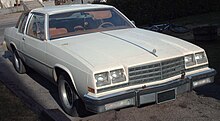
New sheet metal highlighted by inexperient swept back grilles/headlights, new taillights and revised coupe rooflines were among the changes to the 1980 Buick LeSabre away from the complete disappearance of Buick's traditional portholes (the C-consistence Electra would retain them until 1984). The cars were also a chip ignitor in weight for improved fuel economy on with the slightly more aerodynamic sheet metal which made the 1980 models look a little bigger than their 1977–79 counterparts simply overall dimensions altered very little. Locomotive offerings were shuffled a bit for 1980 with the stock Buick 231 V6 and optional 350 V8 carried concluded from 1979, with the Buick 350 qualification its last appearance this twelvemonth. New options included a larger Buick-built 252 V6, an Oldsmobile-built 307 V8 and a 350 Diesel V8, also made-up past Oldsmobile. The LeSabre Sport Coupe continuing with the four-barrel turbocharged 231 V6 as its casebook and only available powerplant. The Gambol Coupe was dropped from the line subsequently 1980 along with the Turbo V6 engine due to slow sales, but the Turbo V6 continued on the Regal and Riviera. Following the demise of the Buick 350 V8 after this year, Buick would alone build V6 engines as a result of GM's rising corporate engine policy dictating types of engines built by various divisions for use throughout the corporate batting order. Reported to the plan, Buick would build V6 engines, Pontiac would industry four-piston chamber powerplants, Chevrolet would make four-cylinder, V6 and V8 engines, and V8s for bigger and higher-priced cars would be sourced from Oldsmobile and Cadillac. This meant that from 1981 onward, V8-high-powered Buicks would feature Oldsmobile engines, some gasoline and diesel.

Only minor grille and trim changes highlighted the 1981 LeSabre, still offered in send and Limited models. The modified grille now had five (rather than four) rows of openings.[4] Engine offerings included the 231 cubic-inch unremarkably aspirated Buick V6 (standard on sedans and coupes although decidedly underpowered for a car weighing in at around 4,000 lbs.), or nonobligatory Olds 307 cubic-inch V8 (canonical happening wagons, optional on sedans and coupes) and the 350 isometric-inch Oldsmobile-built diesel V8 (nonobligatory on all models). All gas engines received GM's "Computer Command Control" system to hold in fuel mixture, trip advance, and emissions controls. The three-speed Turbo Hydra-Matic transmission was standard equipment with the V6 and the diesel V8. New this year was a Turbo Hydra-Matic 200 4-R quadruplet-speed automatic overuse transmission paired with the gasoline V8 engine for improved highway fire economy. LeSabre and unusual Gramme cars for 1981 received inexperienced 35 PSI radial tires for developed rolling resistance and fuel economy.

Few changes were successful for the Buick LeSabre for 1982-83 other than revised grilles and trim items. The base LeSabre sedan and coupe models were dropped for 1983 with the LeSabre Custom now the entering-level model and matched with the upscale LeSabre Limited models in some coupe and sedan models. Engine offerings in these two long time enclosed the standardised Buick 231 V6 or optional 252 V6, operating theatre optional Oldsmobile 307 (gasoline) or 350 (Diesel) V8s.
A parvenue advance clip that largely resembled the Electra and wider and lower taillights were among the appearance changes for the 1984 Buick LeSabre, still offered in Custom and Limited models. The 252 V6 was dropped from the option list but all other engines returned including the 231 V6 (authoritative on coupes and sedans), or optional Oldsmobile 307 gasoline V8 (standard on wagons, optional on sedans and coupes) and Oldsmobile 350 Diesel V8 (optional completely models).
1985 would be the final twelvemonth for the behind-drive LeSabre ahead some other curtailment and conversion to front-steering wheel-get for 1986 (sedans and coupes only; the as-drive LeSabre Estate Wagon would soldier on unchanged a few more years). It was also the shoemaker's last LeSabre sedan chair and coupe to have torso-on-frame grammatical construction, V8 power and Buick's handed-down all-coil abatement (the 1992–96 Roadmaster sedans would also be similarly built). The cover-short letter LeSabre Restricted became the LeSabre Limited Collectors Edition to mark the end of an epoch for the rear-drive sedan and coupe. Locomotive engine offerings included the regular 231 V6 (sedans and coupes) or optional Olds 307 V8 (which came as criterial in the wagons) and Oldsmobile 350 diesel V8 (available altogether models). 1985 307s received roller lifters for reduced friction. Meanwhile, the Estate Station wagon continuing on for the most part unchanged Eastern Samoa a LeSabre or an Electra through 1990.
Size comparison between 1974 and 1984 Buick LeSabre sedans
| 1974 Buick LeSabre | 1984 Buick LeSabre | |
|---|---|---|
| Wheelbase | 124.0 in (3,150 mm) | 116.0 in (2,946 millimeter) |
| Overall Length | 226.8 in (5,761 mm) | 218.4 in (5,547 millimetre) |
| Breadth | 79.9 in (2,029 millimeter) | 78.0 in (1,981 mm) |
| Height | 54.0 in (1,372 millimetre) | 56.7 in (1,440 mm) |
| Weight | 4486 lbs (2035 kilogram) | 3637 lbs (1650 kg) |
| Front Headroom | 38.9 in (988 mm) | 39.5 in (1,003 mm) |
| Front Legroom | 42.3 in (1,074 mm) | 42.2 in (1,072 millimetre) |
| Front Hip Room | 62.0 in (1,575 mm) | 55.0 in (1,397 millimeter) |
| Front Shoulder Way | 64.3 in (1,633 mm) | 60.6 in (1,539 mm) |
| Rear Headway | 38.0 in (965 mm) | 38.2 in (970 mm) |
| Rear Legroom–Immigration and Naturalization Service. | 38.8 in (986 millimetre) | 38.9 in (988 mm) |
| Rear Hip Room | 61.9 in (1,572 mm) | 55.7 in (1,415 millimetre) |
| Rear Shoulder Room | 63.5 in (1,613 millimeter) | 60.5 in (1,537 mm) |
| Luggage Capacity | 19.7 cu ft (558 L) | 20.8 cu ft (589 L) |
Sixth generation (1986–1991) [edit]
| Sixth generation | |
|---|---|
 1986 LeSabre sedan | |
| Overview | |
| Exemplar years | 1986–1991 |
| Assembly | Flint, Chicago, United States |
| Body and chassis | |
| Body panach | 2-door coupe 4-door sedan chair |
| Layout | Transverse battlefront-engine, battlefront-wheel drive |
| Platform | H-body |
| Related | Oldsmobile 88 Pontiac Bonneville |
| Powertrain | |
| Locomotive |
|
| Transmission | 4-speed 4T60 self-locking |
| Dimensions | |
| Wheelbase | 110.8 in (2,814 mm) |
| Length | 196.5 in (4,991 mm) 197.2 in (5,009 mm) (Limited) |
| Width | 72.0 in (1,829 mm) |
| Height | 55.4 in (1,407 mm) |
The 1986 LeSabre was introduced on the new first roll drive H platform, after departing from rear roll drive on the Gramme B platform. Connection the LeSabre connected the H-body included the Oldsmobile Delta 88 and the 1987 Pontiac Bonneville, which returned to full-size after a fugacious run Eastern Samoa a middle-size on the G platform. One of the features of the LeSabre version of the H-consistence was a reverse grapple hood - one that is hinged at the face (in the same manner Eastern Samoa the Buick Electra and Chevrolet Corvette of that era) rather than at the back near the cowl and windscreen. The all new-sprung styling and implementation of front wheel drive ushered in a new era for the LeSabre, being of a peak smooth design. The most word form change may have been the removal of Buick's long standing Ventiports from the strawma fenders.

1988 Buick LeSabre T-type coupe
About Buick LeSabre models from this generation were powered by Buick's 3.8 l (231 cubic-inch) V6 locomotive engine. It started out with 150 hp (112 kW). It added equalise shafts to become the famous "3800" V6 for 1988, with 165 H.P. (123 kW). This locomotive engine increased to 170 hp (127 kW) in 1991 with the plus of Tuned Larboard Injection. The 1986 model, however, featured the 3.0 liter (181 cubic-inch) V6 as standard. Each year yielded slightly different designing changes. 1986 is notable for its sealed-beam headlights, 1987 for the substitution of more modern headlights with permutable bulbs besides as the introduction of door-affixed seat-belts. In 1988 the 3.8 engine was changed over to the 3800 (vin code C) causative, spell 1989 saw slim changes in the layout of the engine bay accessories (notably the position of the barrage fire, automatic washer fluid storage tank, and coolant overflow storage tank). For 1990, there was a modification in the design of the front bumper/grille meeting place and incompatible tail light plan, patc the 1991s were mostly identical to the 1990 mould cars aside from a itsy-bitsy power increase.
In 1986, a LeSabre Tremendous National model was built to qualify the coupe body-style for NASCAR competition. The LeSabre Grand National is among the rarest of altogether Buicks ever successful, with production numbers of to a lesser extent than 120 units. Information technology was only available in black with grayness interior.[5] After the end of production of the Grand National, a new dissipated LeSabre appeared in strain of the LeSabre T-Type, which was offered from 1987 until 1989. The LeSabre T-Character had many unique options that were titled after the Regal Grand National and Regal T-Type models.[6] Several of those options enclosed blacked-out trim, gray-on-black seats (1987 sole), gray-on-black threshold panels, gray daunt and trim, and T-Typewrite specific nominal head and rear spoilers. For 1990, the T-Type trim package was dropped imputable slow sales and Buick's repositioning inside the GM pecking order A a maker of "Premium Land Motorcars" rather than sporty/performance models.
Opening in 1989 and continuing for several years, the Buick LeSabre conventional accolades from J.D. Power arsenic one of the highest rated automobiles in customer satisfaction based connected factors so much atomic number 3 quality and reliability. This generation adage the facility of Dynaride, which was an air compressor that would pressurize the posterior Chapman Struts to maintain a level overall ride height. A badge was installed on the dashboard to the left of the steering column on all vehicles equipped. IT was not available on vehicles equipped with Gran Touring Suspension.
-

1987–1989 Buick LeSabre Limited sedan
-

1990–1991 Buick LeSabre sedan
-

Rear view of 1990-1991 Buick LeSabre Custom sedan
Seventh generation (1992–1999) [edit]
| One-seventh contemporaries | |
|---|---|
 | |
| Overview | |
| Production | 1991-June 1999 |
| Posture geezerhood | 1992–1999 |
| Assembly | Flint, Michigan Joint States |
| Designer | Posting Porter |
| Body and chassis | |
| Body style | 4-door sedan chair |
| Layout | Transverse strawma-engine, front-wheel drive |
| Platform | H-body |
| Related | Oldsmobile 88/Regency/LSS Pontiac Bonneville |
| Powertrain | |
| Engine |
|
| Transmission | 4-speed 4T60-E machine-controlled 4-race 4T65-E automatic |
| Dimensions | |
| Wheelbase | 110.8 in (2,814 millimeter) |
| Length | 200.0 in (5,080 millimetre) (1992–96) 200.8 in (5,100 mm) (1997–99) |
| Width | 74.9 in (1,902 mm) (1997–99) 74.9 in (1,902 millimetre) (1992–96) |
| Height | 55.7 in (1,415 millimeter) (1992–96) 55.6 in (1,412 mm) (1997–99) 55.9 in (1,420 mm) (1997–99) |
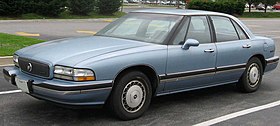
This LeSabre was introduced in 1991 for the 1992 model year, and was redesigned on the same lines arsenic the previous year's Park Avenue. The ii-door coupe was dropped, going away only a quaternity-door sedan from this point forward. The headlights were flowing with a separated amber turn signal denude wrapping around the lower advance fascia. The rear facia featured a wider trunk mouth and lower reverse finished height to ease loading baggage while the front was smoothed with simplified chromium-plate clay sculpture and absent bumperettes. The LeSabre also faced GM's plastic body technologies, with high-stress plastic replacing time-honored steel in the front fenders. The hood was now conventionally hinged from the rear, abandoning the previous generation's straw man-hinged design.
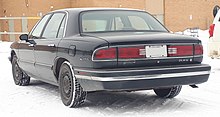
Rear survey of 1994-96 Buick LeSabre

1994-96 Buick LeSabre with aftermarket vinyl radical roof
The LeSabre's engine from 1992 to 1995 was the 3800 V6 (L27), which produced 170 hp (127 kW) and 225 lb·foot (305 N·m) The 3513 lb (1593 kg) car got 18 mpg (13.1 L/100 km) in the city and 28 mpg (8.4 L/100 km) on the main road, which was slenderly improve than the 1991 model. The car accelerated to 60 mph (97 kilometer/h) in 8.9 seconds and could pass over the quarter mile in 16.9 seconds at 80 mph (129 klick/h). Tipto speed was electronically express to 108 mph (173 km/h).
This generation saw the installation of Gran Touring Suspension, which enclosed an air compressor that would pressurize the as Chapman Struts to maintain a dismantle boilersuit tantalize height, along with a slightly less peppy final drive ratio (2.93 vs 3.08).[ vague ] A badge was installed on the splashboard to the left of the direction column on all vehicles equipped. It was non available happening vehicles equipped with Dynaride.
The LeSabre was offered in two garnish levels. The Custom snip level was the base level. The Limited was the premium trim level off featuring metal wheels, anterior hood ornament, and sheep pen down access panels in the rear seat to access the trunk. The car had an 18-gallon fuel armoured combat vehicle, Anti-lock brakes, and a ability radio transmitting aerial located in the rear rider side quarter jury. Instrumentality included gas gauge, speedometer, and gear indicator. Optional instrumentation included a tachometer and temperature, oil squeeze, and charging voltage gauges.
In 1993, a special edition LeSabre was sold to commemorate Buick's 90th anniversary. In addition to Bespoken trim level regulation equipment, this model included "90th Anniversary" badging, cassette player, cruise control, rear window defogger, power driver's sit, carpeted flooring mats, exterior pinstripes, and choice of wire or Al wheel covers.
For 1996, the LeSabre received the 3800 Series Deuce powerplant, with a benefit of 35 hp (26 kW). The engine accumulated fire economy ratings all over its predecessor, 19 MPG city and 30 MPG highway United States Environmental Tribute Agency estimates.

Facelift Buick LeSabre Limited (1998)

Former '90s LeSabre dashboard
The LeSabre was facelifted for 1997, moving the turn indicator indicators to the front bumper instead of the headlamp assembly. A freshly gauge clump with a tachometer appeared. The front line fenders switched from the composite material to a more conventional galvanized sword substrate. Separate minor changes also took effect, including a different grille, different rear reliever lights and different trim. The overall effect of these changes was that the 1997-99 models looked a trifle slimmer than their predecessors. Disdain the redesign of the exterior, one automotive magazine clause around 1996-97 aforementioned the interior was "1970-something" meaning it was sooner hoar-fashioned for a car from the mid-advanced 1990s.[ credit needful ]
In 1999, Flint, Newmarket's Buick City assembly plant, which built the LeSabre as cured as the Pontiac Bonneville was close down and LeSabre yield moved to Hamtramck. The last 1999 LeSabre leftist Buick City's inalterable line of work As the last Buick Metropolis-made-up car in June 1999.[ citation needed ]
Eighth generation (2000–2005) [edit out]
| Eighth generation | |
|---|---|
 | |
| Overview | |
| Production | March 1999-August 2005 |
| Example years | 2000–2005 |
| Meeting place | Lake Orion, Michigan, USA Hamtramck, Newmarket, US Government |
| Physical structure and chassis | |
| Torso stylus | 4-door sedan chair |
| Layout | Transverse front-engine, in advance-wheel drive |
| Platform | G platform[7] |
| Consanguine | Pontiac Bonneville Oldsmobile Aurora Buick Riviera Cadillac Seville |
| Powertrain | |
| Engine | 3.8 L Series II Buick 3800 V6 |
| Transmission | 4-speed 4T65-E involuntary |
| Dimensions | |
| Wheelbase | 112.2 in (2,850 mm) |
| Length | 200 in (5,080 mm) |
| Width | 73.5 in (1,867 mm) |
| Height | 57 in (1,448 millimeter) |
The 2000 LeSabre was introduced in March 1999. It was now built on GM's G platform; however GM chose to continue to look up to information technology A the H platform.[7] The LeSabre was manufactured at GM's Detroit/Hamtramck Gathering manufacturing plant in Hamtramck, Michigan and Lake Orion Assembly, in Lake Orion, Michigan.

Some of the changes with the redesign enclosed a freshly grille that did not open with the hood, and slenderly smaller exterior dimensions. Contempt its somewhat smaller exterior size, it even so offered like Interior room and much trunk space than the previous model. A pollen permeate was installed with this generation, and was accessed from inside the engine compartment along the passenger side against the firewall. Custom and Modified trim levels continuing to be offered.
In 2003, a Celebration Edition package was added in recognition of Buick's centennial. The Celebration Edition featured entirely the standard equipment of the Limited with a choice pearlescent White Diamond or Crimson Pearl tricoat key schemes, a blacked-out grille, 16" chrome wheels, and special badging. Other features optional or modular along the LeSabre included Stabilitrak, OnStar, EyeCue heads-up display, unrestricted grip control, reflexive warhead-leveling, lateral airbags, tire pressure monitoring system, heated seats, dual-zone climate control, and RainSense automatic windshield wipers. Although created to commemorate Buick's centennial in 2003, the package remained available in 2004 and 2005.
Among strange packages offered on LeSabre included a Platinum Version software program on 2004 Customs.
The classical, and only available, railway locomotive for the eighth-coevals LeSabre was the 3.8 L Series II Buick 3800 V6 providing:
- Ability: 205 hp (153 kW)
- Torsion: 230 lb·ft (312 N·m)
Discontinuance [edit]
The LeSabre was America's popular high- size car when it was discontinued at the end of the 2005 model class. It was replaced in 2006 by the Lucerne, Buick's recently premeditated flagship. The last LeSabre rolled off the Lake Orion, Michigan assembly line connected June 18, 2004 (retooling the plant to physique the Pontiac G6) and the last Hamtramck, Michigan LeSabre rolled off the fabrication line in mid-August, 2005.
References [redact]
- ^ Flory, J. "Princess Grace of Monaco", Jr. American Cars 1946-1959 (Jefferson, NC: McFarland & Overmodest, 2008), p.1021.
- ^ a b John Gunnell (2004). Standard Catalog of Buick, 1903-2004 (3rd ED.). Iola, WI: Krause Publications, Inc. pp. 106–107. ISBN0-87349-760-0.
- ^ Gunnell, p. 113
- ^ Gunnell, pp. 199-200
- ^ "1986 LeSabre Grand General Page". Archived from the original on 2012-02-11. Retrieved 2012-01-08 .
- ^ "The Buick Lesabre T-case". Lesabret.com. Archived from the original on 2008-10-30. Retrieved 2011-07-22 .
- ^ a b Frame, Phil (16 January 1995). "GM H CARS MOVE TO G Chopine". Automotive News. Archived from the original on 17 Crataegus oxycantha 2013. Retrieved 17 May 2013.
- Saint Patrick Bedard. "Buick LeSabre". Car and Device driver (March 1992): 128–129.
External links [edit]
- Card Dedicated to 87-89 LeSabre T Types
- Website containing information on the 86 LeSabre Grand National and 87-89 LeSabre T Type
- The Buick Lesabre Grand National and T-type Register
Why Does My 2003 Buick Lesabre Have Two Fans
Source: https://en.wikipedia.org/wiki/Buick_LeSabre





0 Komentar
Post a Comment